
PSA Extends Its Monopoly With Beckett Acquisition, But Does It Matter?
PSA’s parent company now owns three of the four major grading companies — raising questions about competition, pricing power, and choice for collectors.

All Vintage Cards content is free. When you purchase through referral links on our site, we earn a commission. Learn more
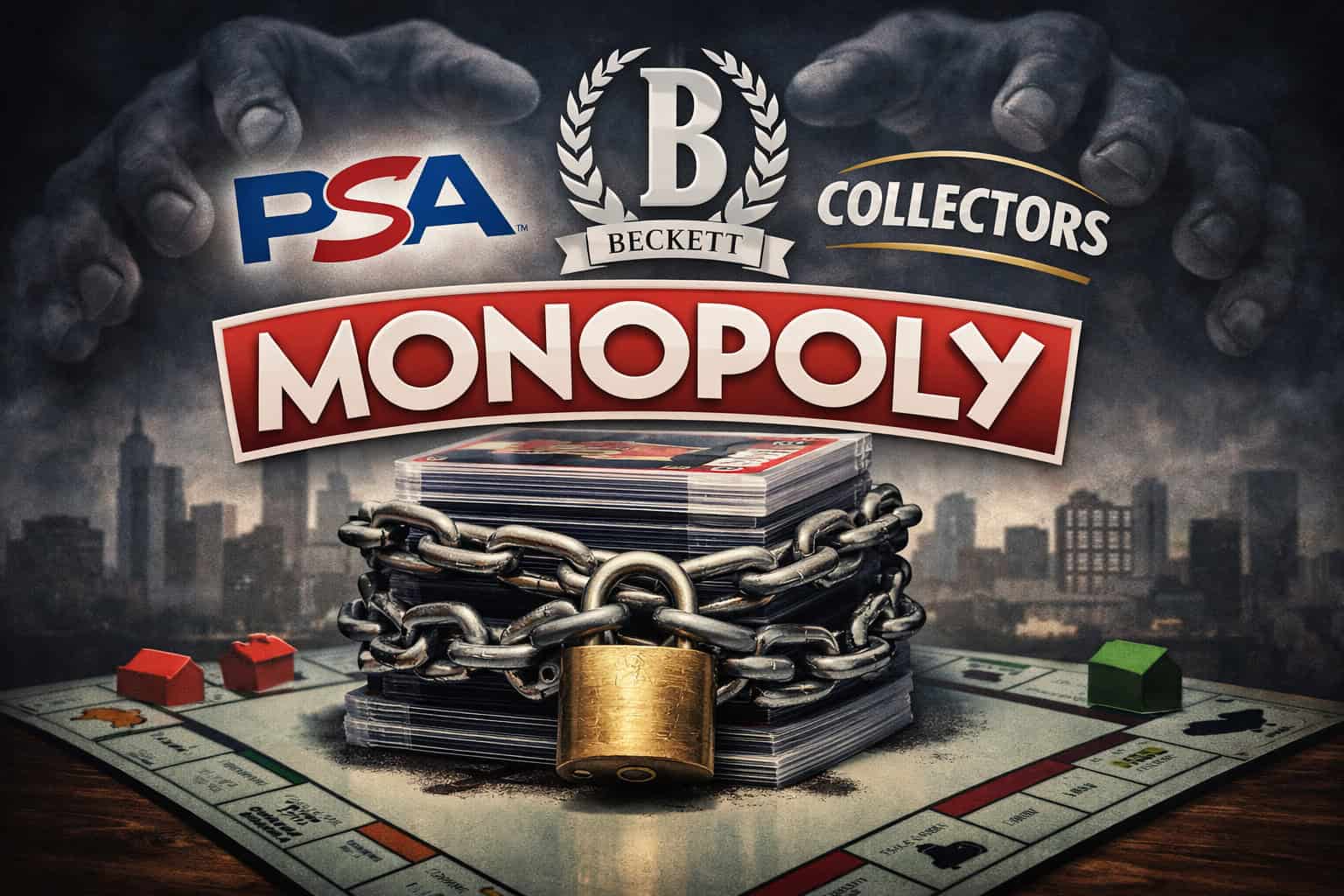
By now, you’ve probably heard the news that PSA’s parent organization, Collectors, has reached a deal to acquire Beckett. With this move, Collectors now owns three of the top four grading companies, leaving CGC as the only remaining member of the “big four” outside its control.
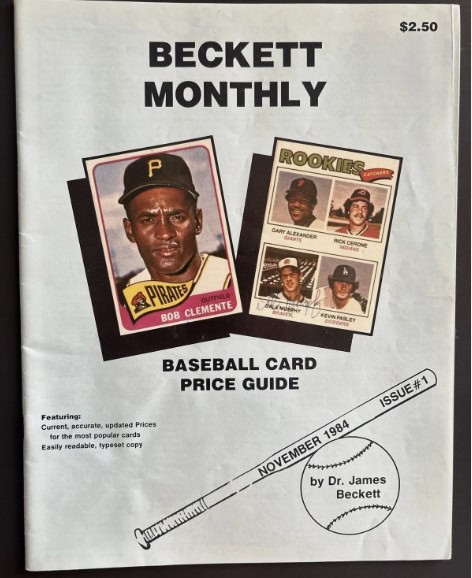
Beckett was founded by Dr. James Beckett, a former statistics professor, in the early 80s and was instrumental in documenting the rise in popularity of sports cards through Beckett Publications, which launched its first monthly price guide in 1984.
Beckett expanded beyond publishing with the launch of Beckett Grading Services (BGS) in 1999. The company was sold to Apprise Media in 2005, then to Global Growth just three years later, and most recently operated under Collectivus Holdings before being acquired by Collectors in 2025.
Collectors, for those who haven’t been following the corporate side of the hobby, was formerly known as Collector’s Universe. It was a publicly traded company that housed both PSA and PCGS (coin grading). In 2020, the company was acquired and taken private by an investor group that included Nat Turner (now CEO of Collectors) and hedge fund manager Steve Cohen.
AVC Acquisitions Portal

Sell Your Card Collection
Skip the listing process and long wait times. Get a professional offer on your collection within 48 hours. See our buy list.

Since that acquisition, Collectors has aggressively consolidated key parts of the sports card ecosystem:
- Acquired CardLadder, a provider of historical pricing and market data (2021)
- Acquired leading auction house Goldin Auctions (2021)
- Acquired grading competitor SGC (2024)
- Acquired grading competitor Beckett (2025)
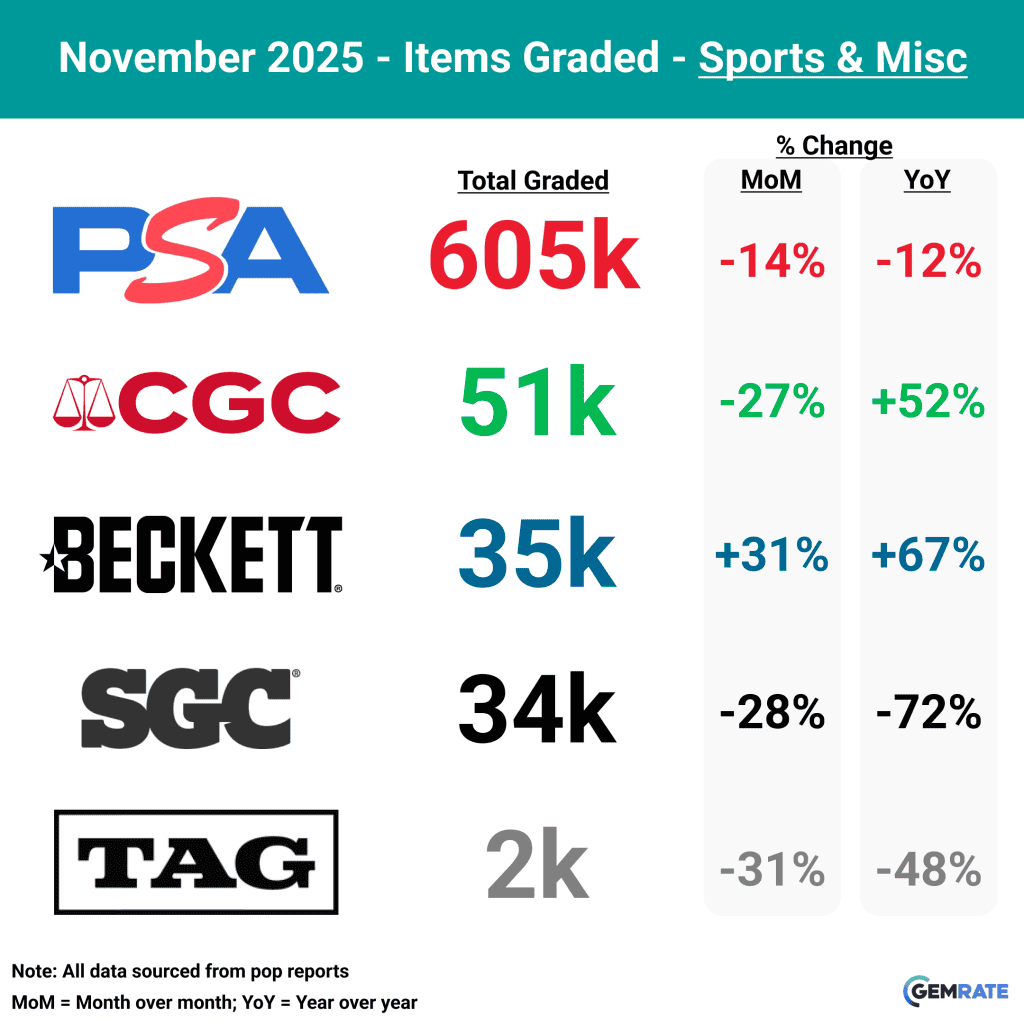
As a result, Collectors now owns PSA, SGC, and Beckett, which, according to GemRate data, rank as the #1, #3, and #4 grading companies in the hobby by volume.
SGC’s Freefall After the Acquisition
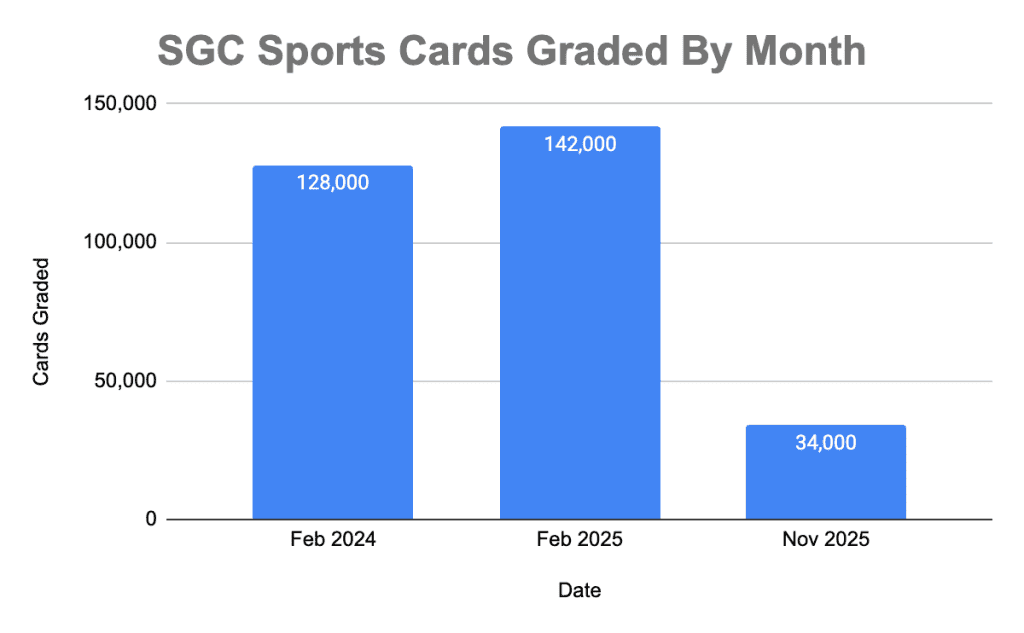
In digging into the grading data, one of the most interesting findings is that SGC’s grading numbers have been in an absolute freefall since Collectors acquired the company. SGC was grading roughly 130,000 cards per month at the time of the Collectors’ acquisition and is now grading 34,000 per month, a 74% decline.
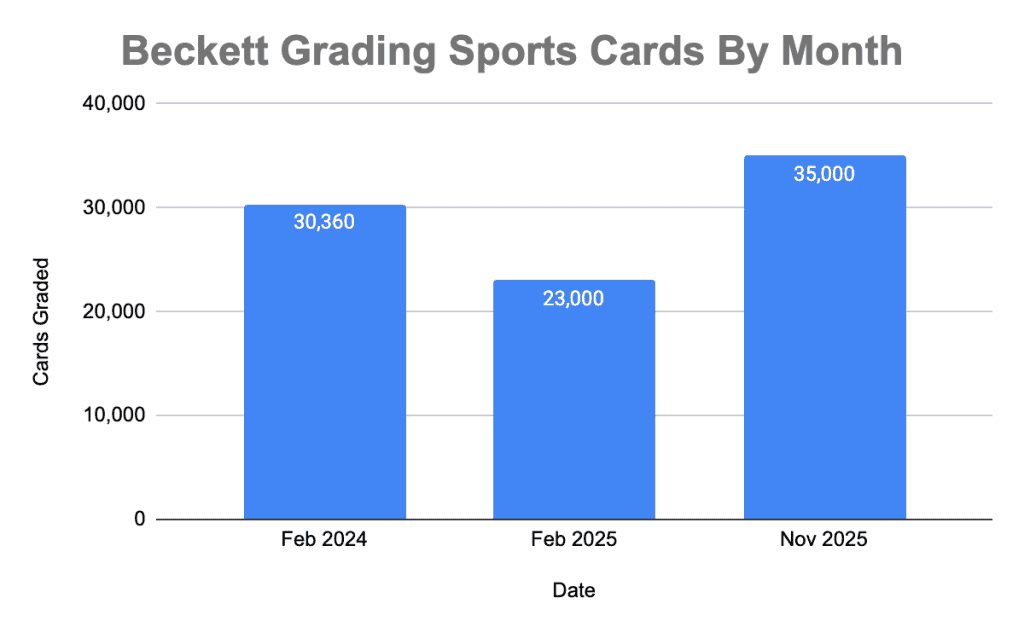
Even more surprising is that Beckett’s position had stabilized, with its total cards graded eclipsing SGC’s in November, leapfrogging SGC into third position overall for graded sports cards.
What’s Going On At SGC?
So what explains SGC’s sudden decline?
Anecdotally, collectors have reported longer turnaround times, lower-quality grading outcomes, and deteriorating customer service. One Reddit user even suggested that PSA is intentionally allowing SGC to wither quietly.
Have friends who work for SGC and have confirmed the buyout from Collectors is no longer looking to keep their operations independent and are downsizing SGC’s operations to add people to the new PSA team that is essentially all of the old SGC employees. Also plenty of claims that the quality of slabs has gone down as Pete was focused mainly on quantity of slabs being moved out, therefore pushing employees to work faster regardless of the quality of work. Now Pete is no longer working there and his brother Jesse who was supposed to be in charge with him gone has been moved to the PSA team. Only reason I ever used SGC was because the slabs looked nice and PSA was so inconsistent with their grades, but now I probably won’t be using either especially with how some of the employees have been talking about it.
If even partially accurate, these claims directly contradict what Collectors stated at the time of the acquisition:
SGC will remain an independent grading brand and no changes are contemplated… with the resources and expertise of Collectors behind us, the sky is truly the limit as to what SGC can achieve.
Peter Steinberg’s departure now appears less coincidental and more indicative of a broader strategic shift. What was once the strongest alternative to PSA may now be seeing its role quietly reduced — if not phased out entirely.
So What About Beckett?
That brings us to Beckett.
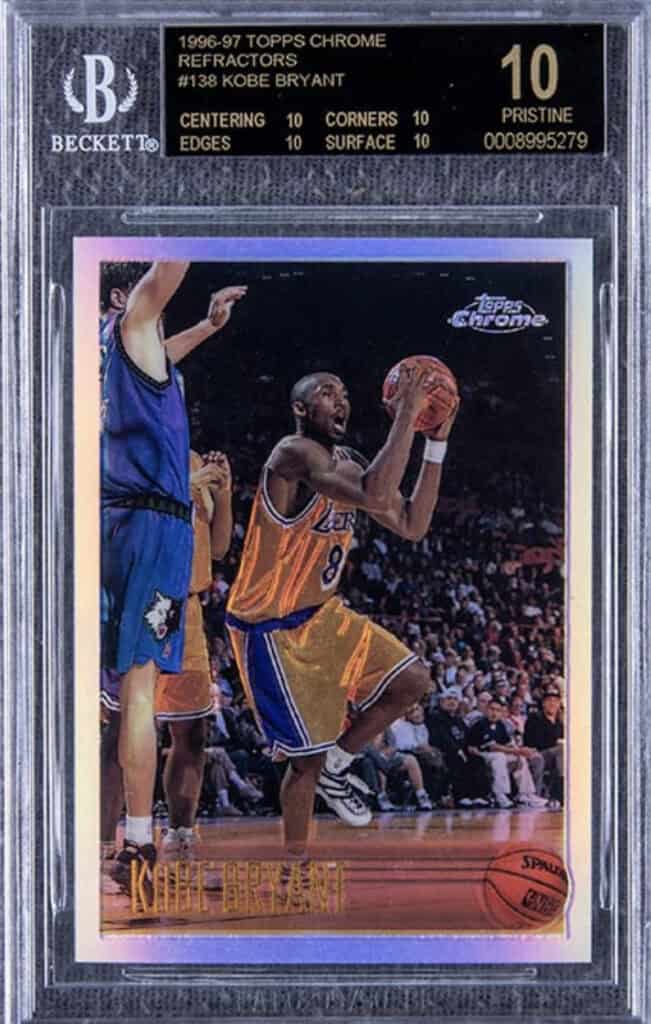
From a brand perspective, Beckett remains well respected in the hobby. BGS slabs still carry credibility, particularly for modern cards, and Beckett offers a clear differentiator in the form of subgrades, which PSA and SGC do not provide.
Even so, Beckett’s grading volumes remain a fraction of PSA’s dominance.
Which raises the central question:
Aside from brand recognition, what exactly is Collectors gaining from the Beckett acquisition?
Beckett remains one of the few grading brands with decades of built-in credibility. Even collectors who primarily submit to PSA still recognize Beckett Grading Services as a legitimate alternative — especially for modern cards. Additionally, Beckett’s signature authentication service (BAS) is recognized as a leader in sports and entertainment authentication.
However, many see this as potentially neutralizing another one of their more inferior competitors. Neither SGC nor Beckett posed any threat to PSA’s dominance, allowing PSA to acquire more resources. Collectors says that Beckett will remain an independent entity; however, given what we’ve seen with SGC, I find that very hard to believe.
Scott Russell, owner of The Collector Connection, believes the transaction is not good for the hobby.
Eliminating competition may be a smart business strategy, but it’s rarely in the best interest of the market as a whole. We’ve already seen SGC crater following its acquisition by Collectors, so it would be foolish to assume Beckett won’t face a similar outcome.
Can Anyone Actually Compete With PSA?
In practical terms, no, not right now.
PSA has reached a scale and level of entrenchment that no other grader currently comes close to matching.
PSA controls:
- The overwhelming majority of grading volume
- The strongest resale premiums across vintage and modern cards
- The deepest trust from auction houses, dealers, and institutional buyers
- The default standard used by price guides, marketplaces, and population analysis
The only remaining independent competitor of scale is CGC. While CGC has a far stronger foothold in TCG grading, it has also become the second-largest grader of sports cards by volume — though still a very distant second to PSA.
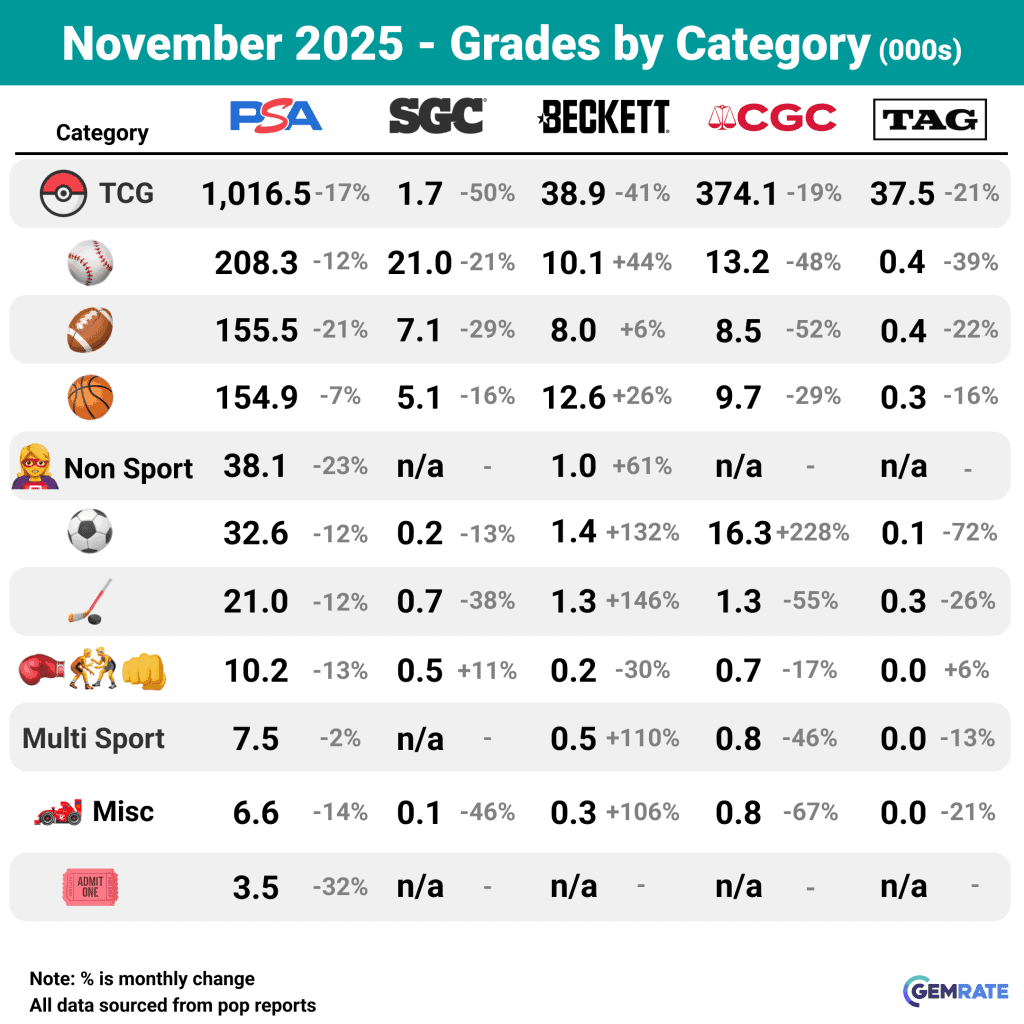
I have had many collectors reach out to me about TAG grading, a tech-driven card grading company. But as of this writing, TAG does not grade any cards from before 1999.
The Competitive Endgame
This acquisition further entrenches PSA as the dominant force in card grading — and, in the near term, it is difficult to argue that collectors benefit from that outcome. If recent history is any guide, what follows may be a slow erosion of Beckett’s grading relevance, mirroring what we’ve already seen with SGC.
If that happens, meaningful choice all but disappears.
Absent a scenario in which CGC evolves into a truly respected second option — one capable of commanding comparable resale premiums — PSA will effectively gain unchecked pricing power. At that point, the market leader would dictate grading fees, service tiers, and turnaround times.
It is only then that collectors may be forced to draw a line — either by resisting price increases, submitting less frequently, or seeking alternative solutions outside the traditional grading ecosystem.


